


.jpg)
Why we chose India for our Christmas holiday
Updated: Feb 16

We went to India in December 2024 with what we thought was a sensible plan. Five nights. A short introduction to a country I knew very little about. A chance to experience the backwaters and see how we felt about India.
That short visit changed everything.
India stopped being about ticking places off and became about being present. Slowing down. Experiencing where we were rather than rushing through it. So when we started talking about our Christmas holiday for 2025, the conversation didn’t take long. We were going back to India. This time for much longer.
This blog is a look at that December trip, and how five nights in 2024 quietly turned into 17 in 2025, and why South India has stayed with me in a way I didn’t expect.
Mysore
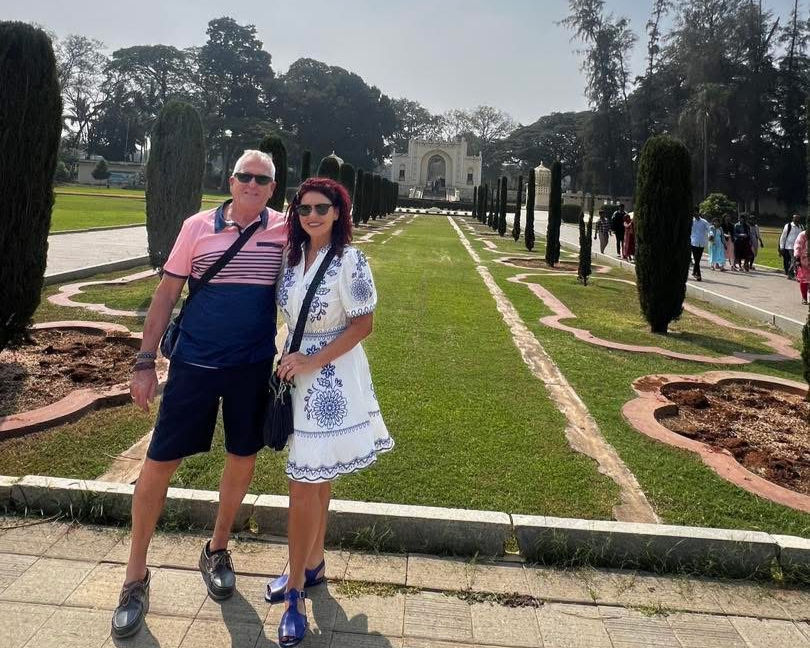
Colour, history and everyday life in South India.
Mysore surprised me straight away. It’s colourful, busy and full of history, but it never feels chaotic. Life just flows, and somehow everything works exactly as it should.
The day started with bright skies and that soft Indian haze that makes everything feel slightly gentler. Driving through the city was an experience in itself. Scooters weaving confidently through traffic, people chatting at roadside stalls, and goats casually crossing the road whenever they felt like it. No one rushes them. Everyone just goes around.

Walking into Tipu Sultan’s Summer Palace was impressive. The wooden carvings, the colours and the arches are beautiful. Our guide made all the difference here, sharing stories rather than just facts, which brought the history to life.

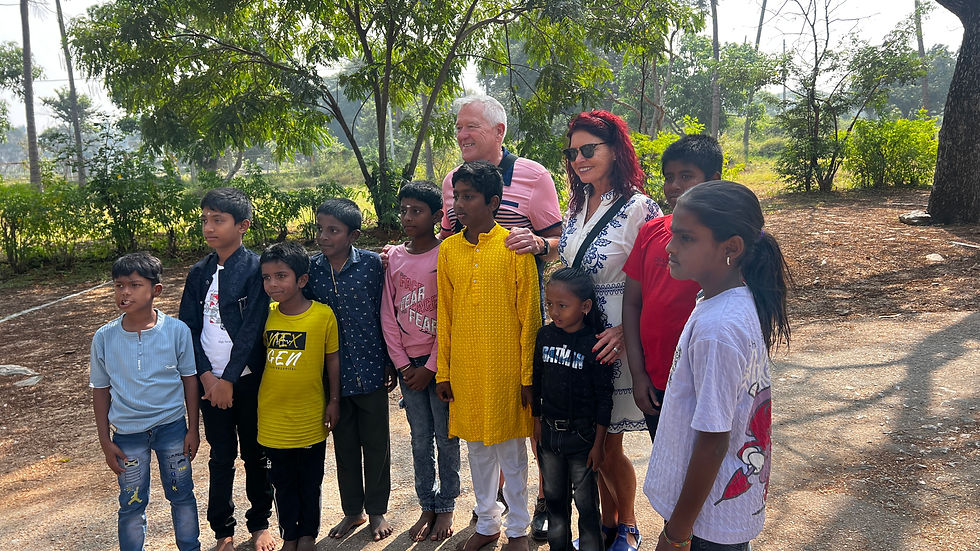
We were asked for so many photos in Mysore, mostly by children, that for a brief moment it felt like we’d missed the memo that we were famous.
The Gumbaz Mausoleum was unexpectedly peaceful. The marble dome glowed in the sunlight and the gardens were quiet and calming. It’s one of those places where you naturally lower your voice without realising.

Driving through the ancient stone gates of Srirangapatnafelt like slipping through time. Old walls, modern life, families on scooters, sarees flowing behind them, and yes, more goats appearing exactly when they felt like it.

The Sri Ranganathaswamy Temple is impossible to miss with its bright yellow gopuram. Bold and detailed outside, then calm and reflective once you step inside. A sacred tree surrounded by carved stones decorated with fresh flowers really stayed with me. Faith here is part of daily life, not something separate.

One of my favourite moments in Mysore was stopping for fresh sugarcane juice pressed right in front of us with a squeeze of lime. Simple, refreshing and completely unplanned.

Mysore Palace is something else entirely. Photos don’t prepare you for the scale or the detail. Inside the Durbar Hall, with its turquoise arches and gold detailing, I spent most of my time looking up.
Mysore felt like a really good balance of history and real life, and it worked beautifully.
Mysore to Kabini
A South India road journey worth taking.
The drive from Mysore to Kabini took around three hours and ended up being one of my favourite parts of the trip.
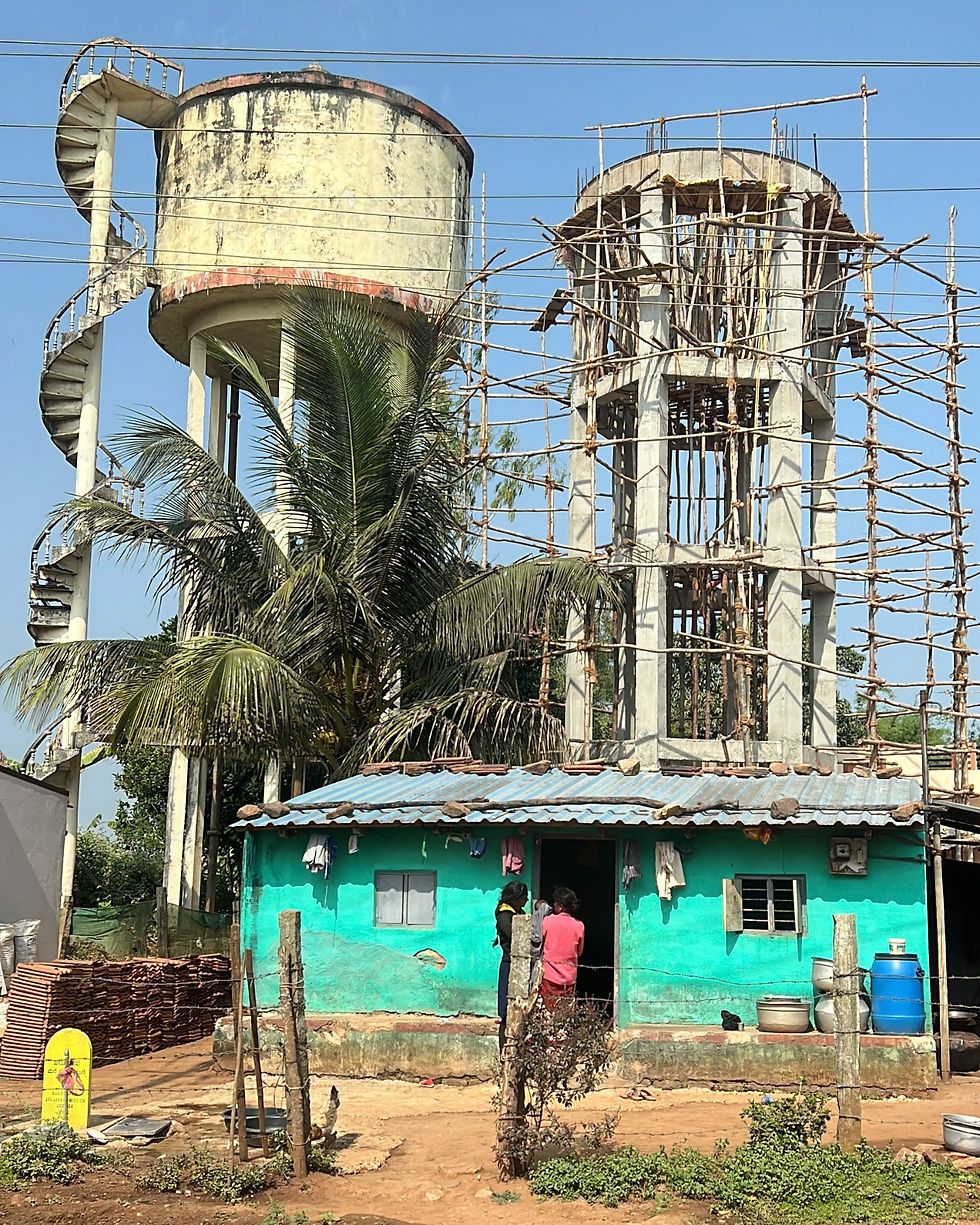
Smooth tarmac one minute, bone-rattling gravel the next. A complimentary bumpy massage.
Village after village rolled past the window. Tiny shops selling snacks, sweets, homewares and flowers for offerings. You can’t help but wonder how they all survive, yet clearly they do.
Butchers with animals hung outside were confronting at first, but they also reminded me how close everyday life here is to the source of food. Nothing hidden. Nothing wasted.
We passed fields of cotton, black pepper, bananas, dhal, ginger and rice. We also saw the source of the aqueduct we’d followed back in Mysore, stretching across farmland before ever reaching the city.
Bullock carts, tractors, cattle and goats all shared the road. Women sorted ginger by hand while chatting together. Men worked the land. A steady hum of daily life.
Then something I genuinely didn’t expect. A bull having shoes fitted.

As the villages faded, the landscape opened up and Kabini immediately felt quieter, greener and slower.
Kabini and Evolve Back

A wildlife lodge experience without rushing.
Evolve Back Kabini is not a rushing-around hotel. It’s designed for slowing down.
Set on the banks of the Kabini River on the edge of Nagarhole National Park, it’s normally known for wildlife safaris. During our stay, safaris were paused due to a local incident, so we weren’t able to enter the park.
Even without them, the stay was incredible.
We stayed in a Safari Hut with a private plunge pool, surrounded by greenery. Evenings were spent listening to birds and the sounds of nature.
An early morning bird safari was a highlight, calm and peaceful, with 27 different bird species spotted, including kingfishers. Wildlife still appeared along the river banks, quietly going about its day.
I also loved seeing local life along the river. People washing clothes, fishing and working by the water’s edge. It felt authentic and grounding.
One evening we enjoyed the seven-course tasting menu, a real introduction to Indian cuisine, and I was pleasantly surprised by the quality of Indian wine.
One evening members of the local tribal community came to perform traditional music and dance, the rhythms and instruments filling the open space and adding another layer to the experience.
The complimentary afternoon teas were a lovely surprise, very British but with a local twist, and the sundowners overlooking the lake quickly became one of our favourite parts of the day.
The staff were warm, attentive and genuinely caring, which made all the difference.

Kabini to Ooty
From jungle roads to mountain air.
The drive from Kabinito Ooty took around five and a half to six hours but never felt like a chore.

There was a constant stream of real life, locals carrying goods on their heads as they worked, followed by the very unexpected sight of the Kama Sutra, because apparently even that fits perfectly into everyday India.

Much of the route runs through national park land, so wildlife spotting became part of the journey. Elephants, monkeys, bison and deer all appeared along the way.
As the road climbed, the scenery changed dramatically. Hairpin bends, sweeping valleys and terraced vegetable farming carved into the hillsides.

We pulled over for cardamom tea at a roadside stop with a great view, one of those simple moments that stays with you; and Mr Swamy, our driver, clearly knew every hidden gem along the way.
Ooty

Mist, gardens and the famous toy train.
Arriving into Ooty felt like stepping into a different world. Cooler air, misty mornings and a lively hill-station atmosphere.
We stayed at Marli Bungalow, a 100-year-old house that feels more like a homestay than a hotel. Friendly hosts, relaxed surroundings and lovely gardens made it a great base.
We visited Dolphin’s Nose and Lambs Rock where mist hid the views, but you could still sense how dramatic they must be on a clear day. Doddabetta, the highest point in the Nilgiris, was colder again with cloud rolling through and proper mountain air.
We also visited a tea factory, and seeing how the tea is processed from start to finish added a whole new appreciation for what ends up in your cup.
Moddy's Chocolate was a favourite stop. Hot chocolate and cake in Ooty’s cool climate felt just right.
We were lucky the sun appeared for our visit to the Botanical Gardens, and as if on cue, there were yet more photo requests from locals, something that seemed to follow us everywhere.
We stopped at St Stephen’s Church, a quiet, beautiful spot that felt perfectly in keeping with Ooty’s slower mountain pace.

On our last night in Ooty, we went out for dinner at a local restaurant, which is always my favourite way to eat anywhere. The place was absolutely packed with locals, always a good sign, and the food was outstanding. We had the most delicious chicken at the Hyderabad restaurant, and the bill for the three of us came to just £15, which still makes me smile.
The journey to the station was full of quiet moments, railway tracks disappearing into the hills, tea pickers working steadily on the slopes, and small churches and homes perched among the greenery with mountains stretching out behind them.
The highlight was the Nilgiri Mountain Railway toy train. It’s one of those experiences that feels special the moment you step on board. The train moves slowly, winding its way throughtea plantations, dense forest, tunnels and over old stone bridges, with tiny houses tucked into the hills along the way. Because it takes its time, you actually see everything. People wave as you pass, tea pickers work on the slopes, and every bend brings a new view. It’s gentle, nostalgic and quietly brilliant, and it was one of those moments where you just sit back, watch the scenery roll by and feel very glad you’re not in a hurry.
Coimbatore

Where travel becomes personal.
Coimbatore was never about sightseeing. It was about people. This part of the trip was about meeting the travel team who work behind the scenes and the on-the-ground team who look after my clients. Faces to names, conversations flowing and trust strengthened.

Oh my. The laughs, the Old Monk rum, and so much incredible food. We were looked after like royalty, but it felt far more like being welcomed into family.

We visited the Isha Yoga Centre, which completely surprised me. The scale of Adiyogi, the chanting, the silence of the meditation space. Swimming in the sacred water alongside other pilgrims was an unexpected and powerful highlight.
One of those simple moments was at Isha, drinking coconut water straight from the coconut - no straw. It turned out to be trickier than expected, but we mastered it in the end, with a few splashes along the way.

We stayed at Hotel Dvara Resort overlooking a lake with mountains behind it. Calm, peaceful and ideal for resetting.

Coimbatore to Chennai
Getting to the station was India in a nutshell. Despite the possibility of being late, we still stopped for food, because of course we did. Some of the team went ahead with our luggage so we didn’t have to battle the crowds, which meant we could eat properly before boarding the train.
Traffic near the station then brought everything to a standstill, so we simply abandoned the car and walked, knowing friends already at the station would sort it out later. Chaotic, but completely organised at the same time. We made the train with plenty of time to spare, and honestly, we really didn’t want to leave.
We travelled overnight by First Class sleeper train in a private compartment. Clean bedding, proper bunks and the gentle rocking of the train made it surprisingly comfortable. Arriving into Chennai Central was full on in the best possible way. Busy, noisy, colourful and completely alive.
Chennai

Temples, food and real life.
Breakfast at a local vegetarian restaurant packed with locals set the tone. Visiting Kapaleeshwarar Temple was incredibly moving. We weren’t able to go inside the main temple, but honestly, just being there was powerful enough. People were deep in prayer, making offerings, bells ringing softly and the smell of incense hanging in the air.
The wish tree especially stayed with me, covered in prayers and hopes tied carefully to its branches. Our guide took us around the temple complex and explained everything we were seeing, which gave real meaning to the experience rather than just walking past it. It was one of those moments where you feel quietly privileged just to observe and take it all in.
Lunch was a traditional South Indian vegetarian thali served on a banana leaf, and I didn’t miss meat at all.

Outside the temple, the streets were alive with colour and scent. Flower stalls overflowed with garlands of jasmine, marigold and roses, their colours bold and joyful - reds, yellows and whites piled high and hanging in thick strands. The smell was incredible, fresh flowers mixed with incense, spices and the earthy scent of vegetables from nearby stalls.
Vendors sat patiently arranging blooms, threading garlands by hand, while shoppers stopped to choose offerings for prayer. It felt busy but unhurried, a beautiful mix of everyday life and devotion, and one of those moments where you just want to stand still, breathe and take it all in.
We arrived at Santhome Basilica during a wedding, which I loved watching.
Fort St George’s museum helped connect the historical layers of the city.
Watching the women on the beach was fascinating. They sat in a close circle playing a marble style game, completely absorbed, focused and intent. What really stood out was how they positioned themselves, each woman naturally supporting the one next to her, backs leaning gently together so everyone was comfortable. There was a quiet sense of care and connection in the way they sat. We were curious about the game and could have watched for ages, but it was clear they were concentrating and didn’t want to be disturbed, so we stayed back and simply observed. Sometimes just watching everyday life unfold tells you more than any explanation ever could.

We finished at the fish market by the beach, where everyday life continues along a coastline reshaped by the 2004 tsunami and still standing strong.
Puducherry
French influence and emotion.
Puducherry gently draws you in. Pastel buildings and wide streets in the French Quarter, then turn a corner and you’re back in colourful India.
We stayed at CGH Maison Perumal, a small heritage hotel that felt welcoming and personal. Exploring with a local guide added real depth, and taking part in a coconut-smashing ceremony at the temple was far more emotional than I expected.
Evenings were about sunsets, tuk tuk rides and casually walking past a Bollywood film being made. Puducherry felt relaxed, safe and somewhere I could easily have stayed longer.
Mahabalipuram

The perfect end to a South India itinerary.
Mahabalipuram was our final stop, chosen deliberately to slow right down.
The Group of Monuments is incredible, especially the Pancha Rathas, five temples carved from a single rock. The Shore Temple sitting right on the coastline is equally impressive.
We stayed at Radisson Blu Resort Temple Bay and completely switched off. Beach walks, seafood at Moonrakers, Christmas Day by the sea and Boxing Day doing absolutely nothing.
It was the perfect way to end the trip.
Why we’ll be going back to India
India isn’t about rushing from one place to another. The backwaters started it. Mysore added colour and history; Kabini added space and nature; the mountains, trains, cities and coast all added something different. That’s how five nights turned into 17. And that’s why Autumn 2026 is already in the planning stages.
If South India is on your mind, my biggest advice is simple. Slow down, build in downtime and let the journey be part of the experience.
And if you’d like help planning your own India itinerary, you know I’m with you every step of the way, because I’ve been there.


